Solar Eclipse Morocco 2027: Path of Totality
The umbral path of the solar eclipse Morocco 2027 sweeps across northern Morocco, encompassing over 250 kilometers of central shadow width and creating celestial conditions unmatched anywhere else in the Mediterranean. From maximum land totality in Tangier to the cultural heritage of Meknès (famed for its celestial Éclipse Moroccan wine), explore the astronomical path, timing coordinates, and historical context of Moroccan eclipses below.
1. The Astronomical Mechanics of the 2027 Path
The Moon's umbral shadow strikes the Earth at sunrise in the Atlantic Ocean and accelerates eastward. As it enters northern Morocco across the Strait of Gibraltar, the solar altitude climbs to over 60°, providing observers with a virtually overhead Sun in pristine morning air.
The path width in Morocco measures approximately 258 kilometers (160 miles) across the northern region. Locations positioned close to the northern center line—such as Tangier (4m 51s) and the Mediterranean coast near Tetouan—experience up to 4 minutes and 51 seconds of totality, while southern regions such as Marrakech (92.5%) and the Erg Chebbi desert dunes (89%) remain outside totality, observing partial phases only.
2. Morocco Totality Path Map
Detailed map illustrating the 100% totality band, centerline, and duration markers across Moroccan cities.
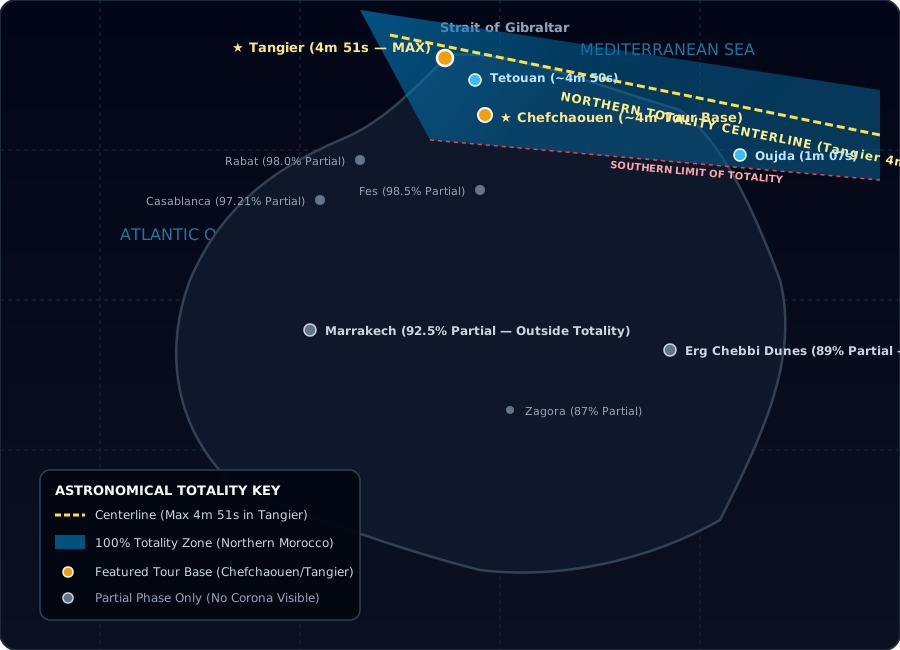
★ Yellow center line indicates maximum totality duration. All cities within the color gradient band experience 100% total solar eclipse.
3. City-by-City Totality Table
Precise astronomical calculations for major Moroccan cities inside the 100% totality path.
| City | Start of Totality | Duration | End of Totality | Historical Cloud Risk |
|---|---|---|---|---|
| Tangier | 09:44:47 | 4 min 51 sec | 09:49:38 | < 4% |
| Tetouan | 09:45:20 | ~4 min 50 sec | 09:50:10 | < 3% |
| Oujda | 09:51:15 | 1 min 7 sec | 09:52:22 | < 2% |
4. What to Expect During the Minutes of Totality
Most total solar eclipses afford only 2 to 3 minutes of totality. Experiencing 5 to 6 continuous minutes in Morocco fundamentally changes the sensory encounter:
Dramatic Sky Darkening & Celestial Bodies
The sky shifts into deep indigo-violet. The planets Venus and Jupiter will blaze brightly in the morning sky alongside celestial constellations.
Noticeable 10°F–15°F Temperature Drop
As the solar radiation is abruptly cut off, a crisp solar wind develops. Desert and mountain valley temperatures plunge swiftly, creating physical goosebumps.
360-Degree Sunset Horizon
Unlike a standard sunrise or sunset confined to the horizon, totality casts warm crimson and golden sunset hues in all directions around you simultaneously.
Diamond Ring & Baily's Beads
Seconds before and after totality, sunlight gleams through lunar valleys, creating sparkling ruby prominences and the spectacular 'diamond ring' flash.
Astronomical Phenomena Captured by NASA
Photographic records from the NASA Science Eclipse Gallery illustrating the optical phenomena visible during the August 2, 2027 event:
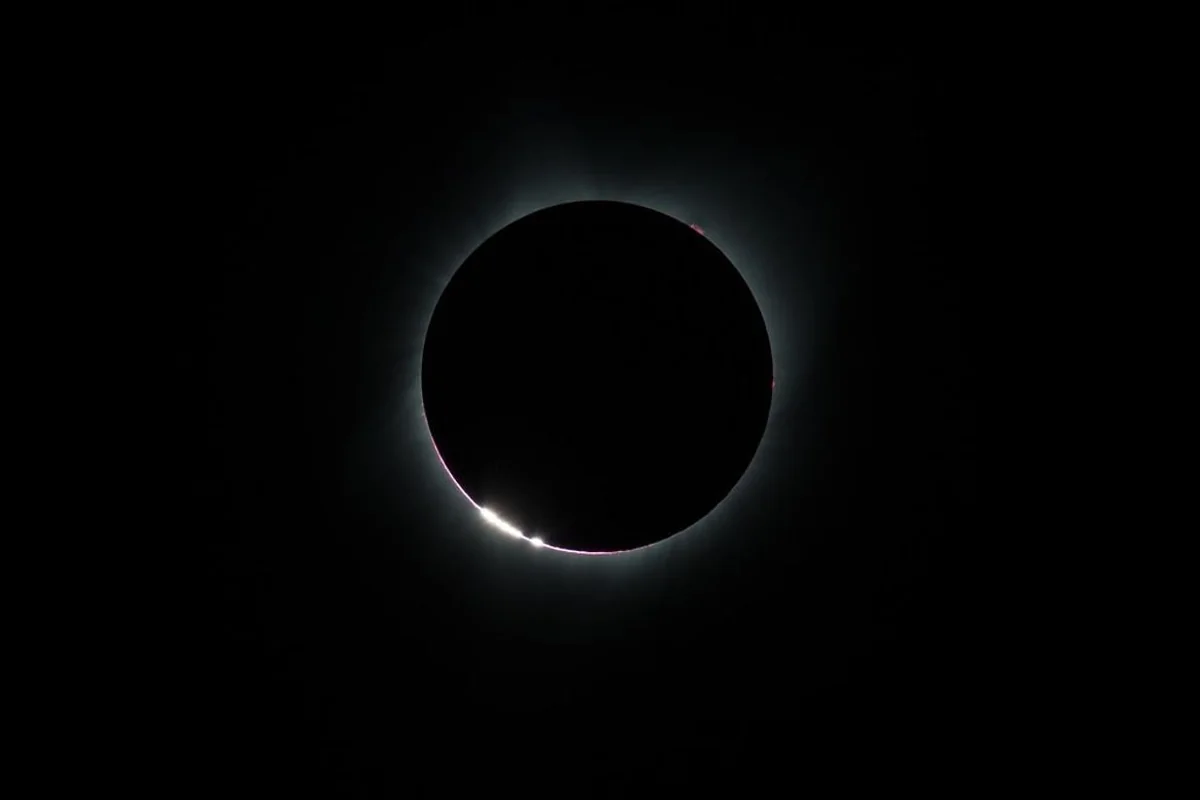
Baily's Beads & Diamond Ring
Sunlight streams through lunar valleys along the Moon's rugged edge immediately before second contact.
Photo: NASA / Aubrey Gemignani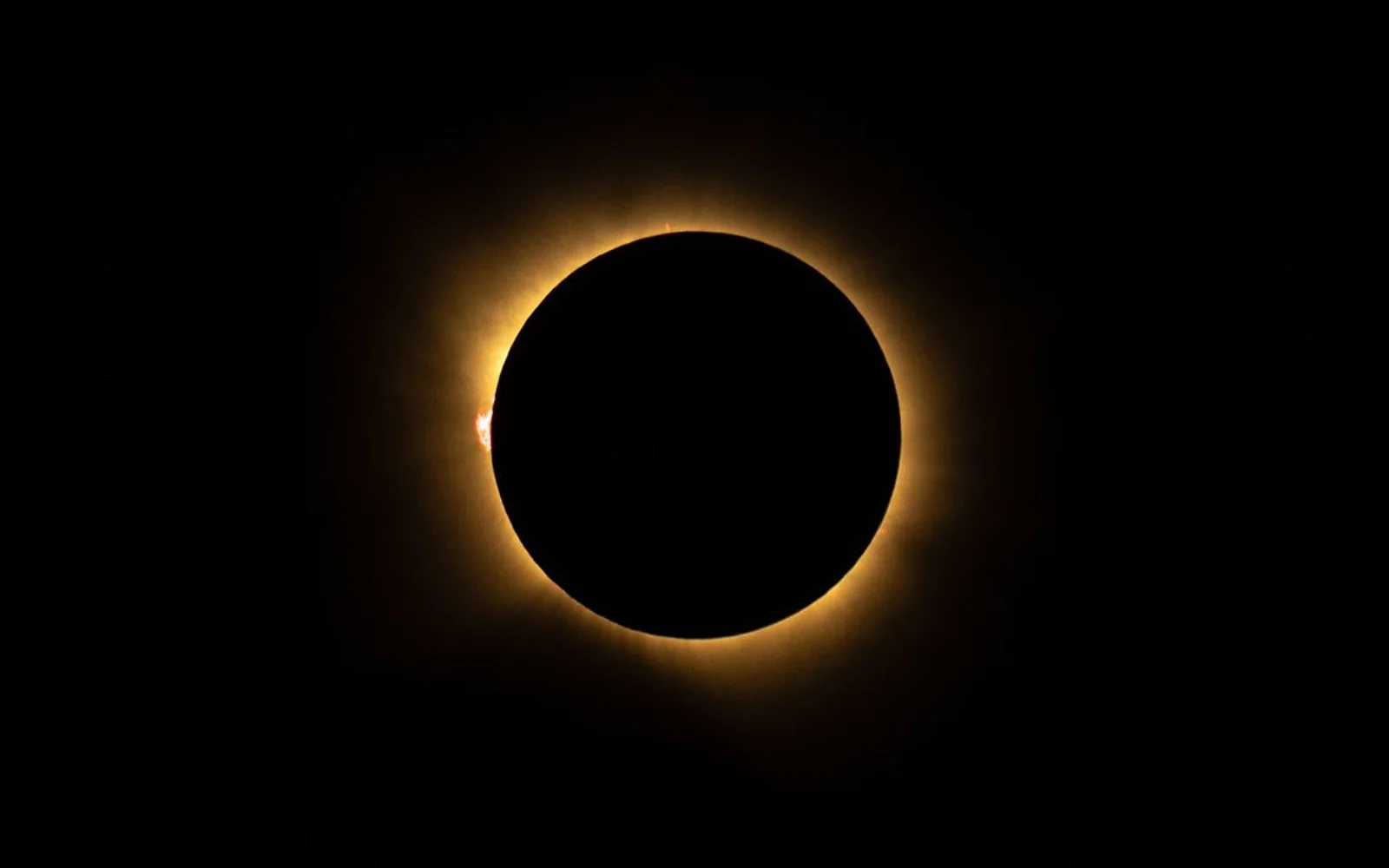
Solar Prominences & Corona
Towering magnetic loops of pink plasma erupt from the Sun's chromosphere into the outer white corona.
Photo: NASA / Aubrey Gemignani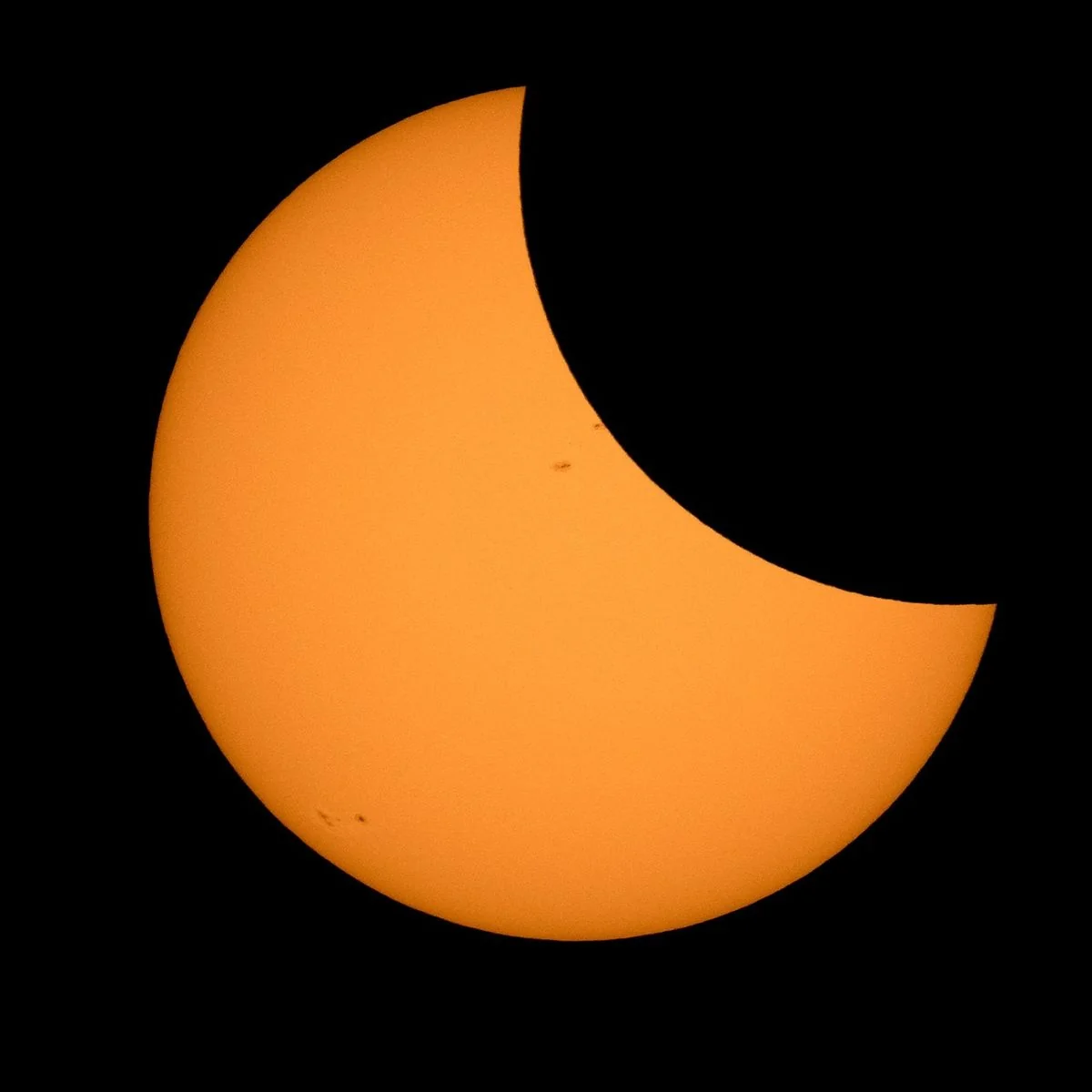
Ingress & Active Sunspots
Solar filter view showing the crisp lunar silhouette eclipsing active magnetic sunspot groups during partial ingress.
Photo: NASA / Bill Ingalls5. Safety and Certified Eclipse Glasses
Looking directly at the Sun during the partial eclipse phases will cause permanent eye damage. The only time it is safe to look with the naked eye is during the 100% totality phase.
6. Solar Eclipse History in Morocco: Past, Present & Future Events
The total solar eclipse of August 2, 2027 (Morocco Eclipse 2027) represents the crown jewel of modern North African astronomical history. To understand why this event is so significant, astronomers look at the chronological sequence of past and future eclipses visible from the Kingdom:
- October 3, 2005 (Annular): The central ring of fire crossed northern Morocco and the Iberian peninsula, with maximum solar ring obscuration lasting approximately 4 minutes.
- May 30, 1984 (Broken Annular / Hybrid): A rare bead-like eclipse track traversed northwest Morocco and the Atlas mountains with a fraction of a second of broken totality.
- April 8, 2024 & August 21, 2017: Both famous total solar eclipses were centered across North America (USA, Mexico, Canada); Morocco only experienced marginal coastal sunset partial phases in the far west.
- Lunar Eclipses in Morocco: Unlike daytime solar eclipses, nighttime lunar eclipses occur several times per decade, notably the July 16, 2019 partial lunar eclipse and the January 21, 2019 total ‘Super Blood Wolf Moon’ visible across Moroccan skies.
- March 29, 2025 (Partial): A substantial partial solar eclipse visible across Morocco with 35% to 45% solar obscuration in Casablanca, Rabat, and Tangier.
- August 2, 2027 (Total — ‘Eclipse of the Century’): 100% totality spanning 4 min 51 sec in Tangier and 3 min 32 sec in Chefchaouen. The longest land totality until 2114.
- January 26, 2028 (Annular): An annular solar eclipse grazing southern Spain and northwestern Morocco at sunset, creating a golden ‘ring of fire’ over the Atlantic coastline.
- Cultural Note (Éclipse Moroccan Wine): In Moroccan culture, the cosmos is celebrated in gastronomy—most famously by Les Celliers de Meknès with their renowned ‘Éclipse’ red wine (Cabernet Sauvignon & Syrah) harvested from the Guerrouane AOG plateau near Meknès and the ancient Roman ruins of Volubilis.
Join an Expert-Led Morocco Eclipse 2027 Tour
Ensure prime positioning on the central totality axis with guaranteed riad reservations, private transport, and licensed local guides.