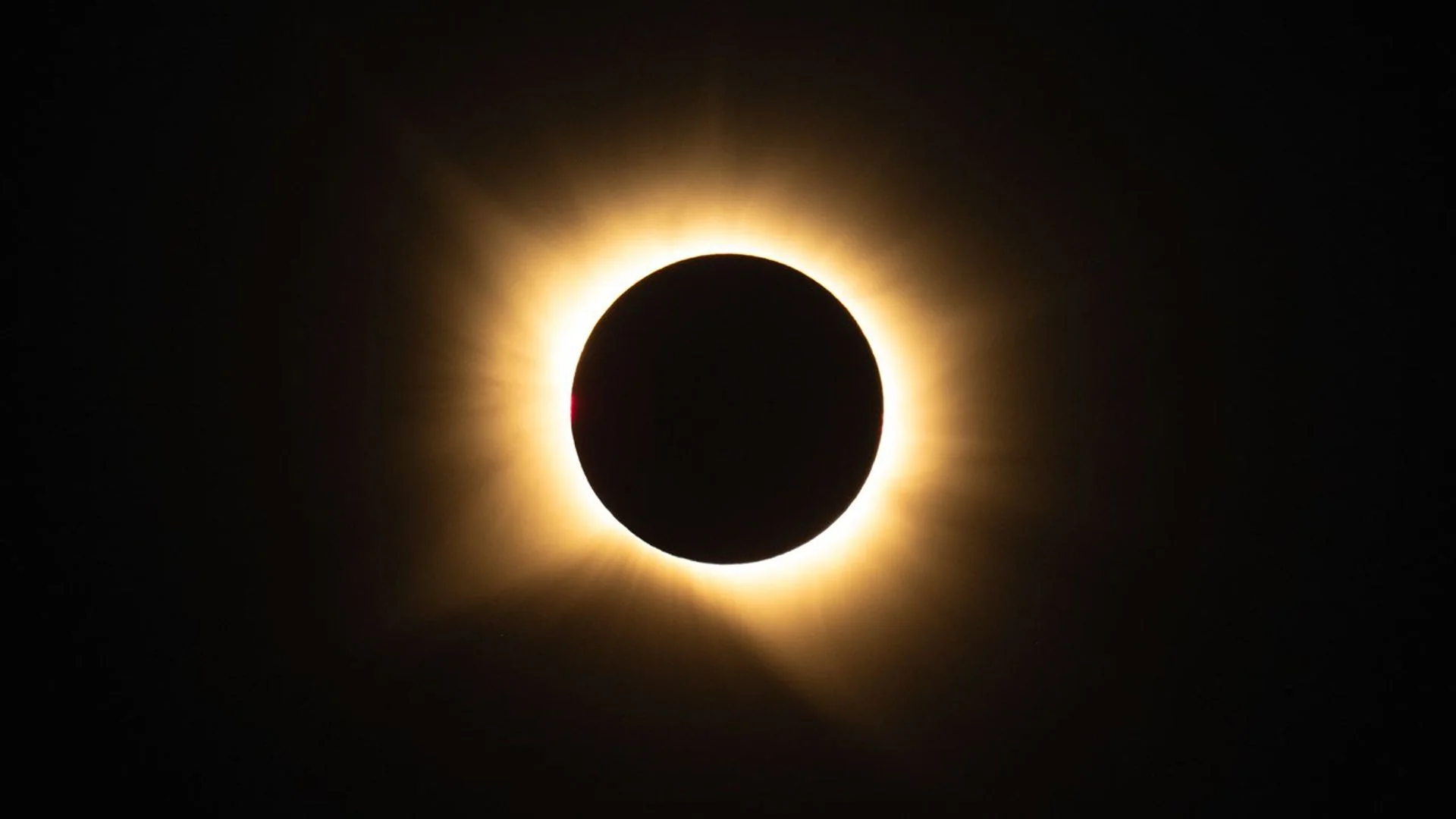
1. The 2027 Total Solar Eclipse: The 'Eclipse of the Century'
On August 2, 2027, the Moon will pass directly between the Sun and Earth, casting an umbral shadow across the Strait of Gibraltar, southern Spain, Morocco, Algeria, Tunisia, Libya, Egypt, and Saudi Arabia.
What sets the 2027 eclipse apart from almost all other modern eclipses is its sensational duration. Due to the Moon being near perigee (closest approach to Earth) and the Earth being near aphelion (farthest from the Sun), the Moon's apparent diameter significantly exceeds that of the Sun. In Northern Morocco, totality reaches 4 minutes and 51 seconds in Tangier (the maximum land duration in Morocco) and 1 minute and 7 seconds in Oujda, while major southern hubs such as Casablanca (97.21%), Marrakech (92.5%), and the Sahara Desert (89%) experience deep partial phases and require traveling north to witness totality.
2. Path of Totality Across Morocco & Timings
The umbral shadow enters northern Morocco across the Strait of Gibraltar and Mediterranean coastline, encompassing Tangier, Tetouan, the northern Rif mountains corridor, and stretching eastward towards Oujda before crossing into Algeria.
| City / Region | Partial Start | Totality Starts | Duration | Sun Altitude |
|---|---|---|---|---|
| Tangier | 08:40:39 | 09:44:47 | 4 min 51 sec | 64° |
| Tetouan | 08:41:10 | 09:45:20 | ~4 min 50 sec | 64° |
| Oujda | 08:43:01 | 09:51:15 | 1 min 7 sec | 65° |
3. Official NASA & Wikipedia Astronomical Parameters
According to official orbital ephemerides cataloged by NASA and published in the authoritative international eclipse registers, the August 2, 2027 total solar eclipse holds a rare astronomical profile produced by celestial mechanics alignment:
The Physics Behind the 6+ Minute Duration: Lunar Perigee Convergence
The Moon reaches perigee (its closest orbital approach to Earth) on August 2, 2027, at 07:25 UTC—scarcely 2.5 hours prior to the umbra making landfall across the Strait of Gibraltar. Consequently, the Moon's apparent semi-diameter swells to 16' 43.1", compared to the Sun's semi-diameter of 15' 45.5". This massive disc discrepancy blankets North Africa in over 250 kilometers of central shadow and casts unprecedented twilight darkness.
Global Contact Sequence (Universal Time & Morocco Local Time)
| Contact Event | UTC Time | Morocco Time (GMT+1) | Astronomical Meaning |
|---|---|---|---|
| First Penumbral Contact (P1) | 07:31:22 UTC | 08:31:22 | First partial phase begins on Atlantic surface |
| First Umbral Contact (U1) | 08:24:38 UTC | 09:24:38 | Totality path first touches Earth surface |
| Tangier Totality Midpoint | 08:47:12 UTC | 09:47:12 | 4m 51s totality in northern Morocco |
| Greatest Duration Point | 10:01:34 UTC | 11:01:34 | Maximum duration (6m 23s) in eastern Sahara / Egypt |
| Greatest Eclipse (Center) | 10:07:50 UTC | 11:07:50 | Shadow axis closest to Earth center (25°30′N, 33°12′E) |
| Last Umbral Contact (U4) | 11:51:06 UTC | 12:51:06 | Totality exits Earth surface over Indian Ocean |
| Last Penumbral Contact (P4) | 12:44:21 UTC | 13:44:21 | Global partial eclipse concludes completely |
Wikipedia Mediterranean & North Africa Totality Comparison
Official Wikipedia Archive| Location | Country | Local Totality Start | Totality Duration | Max Magnitude |
|---|---|---|---|---|
| Tangier | Morocco 🇲🇦 | 09:44:47 (GMT+1) | 4 min 51 sec | 1.0339 |
| Ceuta | Spain (Plazas) 🇪🇸 | 10:45:26 (CEST) | 4 min 49 sec | 1.0304 |
| Gibraltar | Gibraltar 🇬🇮 | 10:45:39 (CEST) | 4 min 28 sec | 1.0218 |
| Cádiz | Spain 🇪🇸 | 10:45:29 (CEST) | 2 min 56 sec | 1.0076 |
| Málaga | Spain 🇪🇸 | 10:48:12 (CEST) | 1 min 57 sec | 1.0031 |
| Oujda | Morocco 🇲🇦 | 09:51:15 (GMT+1) | 1 min 07 sec | 1.0014 |
| Oran | Algeria 🇩🇿 | 09:51:10 (CET) | 5 min 08 sec | 1.0365 |
| Sfax | Tunisia 🇹🇳 | 10:08:54 (CET) | 5 min 41 sec | 1.0323 |
| Benghazi | Libya 🇱🇾 | 11:27:58 (EET) | 6 min 11 sec | 1.0385 |
| Luxor | Egypt 🇪🇬 | 13:02:14 (EEST) | 6 min 22 sec | 1.0361 |
| Casablanca | Morocco 🇲🇦 | 09:44:25 (Max Partial) | Partial: 97.21% Coverage | 0.9721 |
4. The Midday Twilight Sky: Planets & Stars in Totality
When totality plunges northern Morocco into sudden twilight darkness, observers look up into an alien celestial panorama. The Sun resides in mid-constellation Cancer, just southeast of the Beehive Cluster (M44). The rapid darkening reveals a dramatic planetary lineup and the bright stars of the Winter Hexagon across the midday Moroccan dome:
Venus
Blazing BeaconThe brightest planet in the heavens, unmistakably visible to the naked eye just degrees from the eclipsed solar disk.
Mercury
Mag −1.2Nearing superior conjunction with its sunlit hemisphere illuminated, glowing exceptionally bright several degrees west of Venus.
Jupiter & Regulus
20° East in LeoThe giant planet shines brilliantly alongside Regulus, the blue-white alpha star of the constellation Leo.
Mars & Saturn
Flanking HorizonsMars glows with a subtle reddish hue farther east in Virgo, while Saturn anchors the western celestial flank.
The Winter Hexagon Constellations
Midday Winter SkyBecause the eclipse takes place in August, the familiar winter constellations usually hidden by midday solar glare will emerge: Sirius (Canis Major), Procyon (Canis Minor), Pollux & Castor (Gemini), Capella (Auriga), Aldebaran (Taurus), and Rigel (Orion) shining in an indigo midday twilight.
5. Weather and Cloud Cover Statistics
In eclipse chasing, weather is everything. Even a six-minute totality is ruined by a single rogue cloud. Fortunately, Morocco in August is meteorologically one of the most reliable eclipse destinations on the planet.
Virtually cloudless skies guaranteed across the Erg Chebbi dunes.
Protected mountain valley ensures high atmospheric clarity.
Warm, stable continental air mass over the Haouz plains.
Because totality occurs between 09:37 and 09:49 AM local time, travelers experience the spectacle during the cooler morning hours before typical midday August summer heat develops.
6. Best Morocco Eclipse Viewing Locations
Depending on whether you prioritize photographic drama, maximum duration, or luxury accommodation, Morocco offers distinct observation hubs:
A. Tangier & Northern Mediterranean Coast
4 min 51 secThe epicenter of totality on land in Morocco. With 4 minutes and 51 seconds of totality, dramatic ocean promontories at Cape Spartel, and 2-hour high-speed train connectivity from Casablanca, Tangier is the top choice for astronomical purists.
Explore Tangier Eclipse Guide →B. Chefchaouen & Tetouan Corridor
Tour Base (~4m)Nestled between peaks of the Rif mountains, Chefchaouen's indigo-washed medina walls reflect the corona twilight in shades of lavender and cobalt. Our official 7-day tour positions travelers in Chefchaouen and Tetouan the day before for a relaxed observation morning.
Explore Chefchaouen Viewing & Tour Base Guide →C. Marrakech & Sahara Desert (Southern Gateways)
Partial Only (92.5% & 89%)Important astronomical note: Southern Morocco lies outside totality. Marrakech experiences a 92.5% partial eclipse, while Merzouga dunes experience 89%. Both are ideal for luxury pre-tour cultural stays or post-eclipse desert safari extensions, but travelers must journey north for totality.
7. Eye Safety & Certified Solar Filters
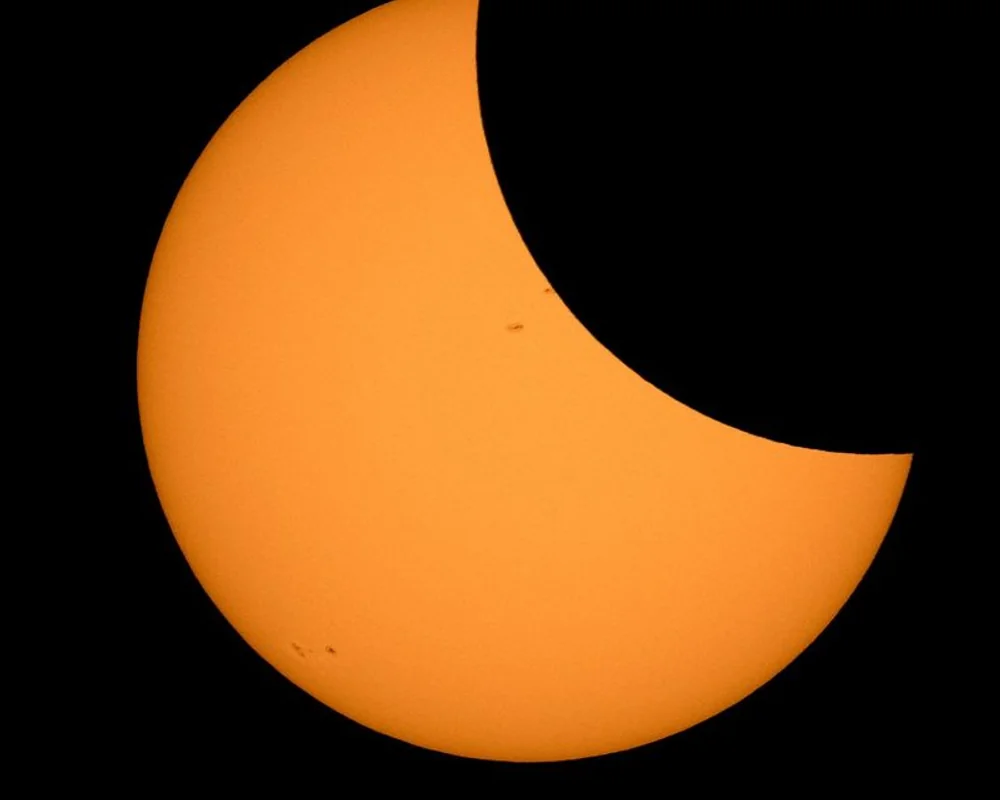
Eye safety is paramount during any solar eclipse. Looking directly at the uneclipsed or partially eclipsed Sun without specialized protection causes permanent retinal burns (solar retinopathy).
- 1.Partial Phases: You MUST wear certified ISO 12312-2:2015 eclipse glasses. Ordinary dark sunglasses, polarized lenses, or smoked glass are completely unsafe.
- 2.100% Totality: During the exact window when the Moon completely covers the Sun's bright face, you can safely remove glasses to behold the solar corona with the naked eye.
- 3.Optics: Never look through binoculars, telescopes, or cameras without an approved front-mounted solar filter.
 ISO 12312-2:2015 Approved
8. Planning Logistics: Getting Around Morocco
Morocco features some of Africa's most modern transport infrastructure. However, during the week surrounding August 2, 2027, hundreds of thousands of international visitors will converge on northern Morocco.
Al Boraq High-Speed Train
Connects Tangier to Casablanca in just 2 hours and 10 minutes at 320 km/h. Clean, air-conditioned, and comfortable.
Private Chauffeured Fleet
The recommended method for navigating northern routes and desert corridors to avoid rental car breakdowns and road congestion on eclipse morning.
9. Demographic Surge & Accommodation Advisory (89M Resident Path)
Global demographic studies on the August 2027 eclipse demonstrate an unprecedented scale of international interest:
More than double the 44 million people who resided along the April 2024 North American eclipse path.
Anticipated to become the single most photographed and watched astronomical spectacle in human history.
International news outlets reported early hotel sellouts in northern Morocco and southern Spain 20 months in advance.
10. Experience the 2027 Eclipse with Morocco Travel Experts
Leave all the logistics, private transfers, 4-star standard or 5-star luxury riad bookings, and eclipse observation stations to our local Moroccan team.