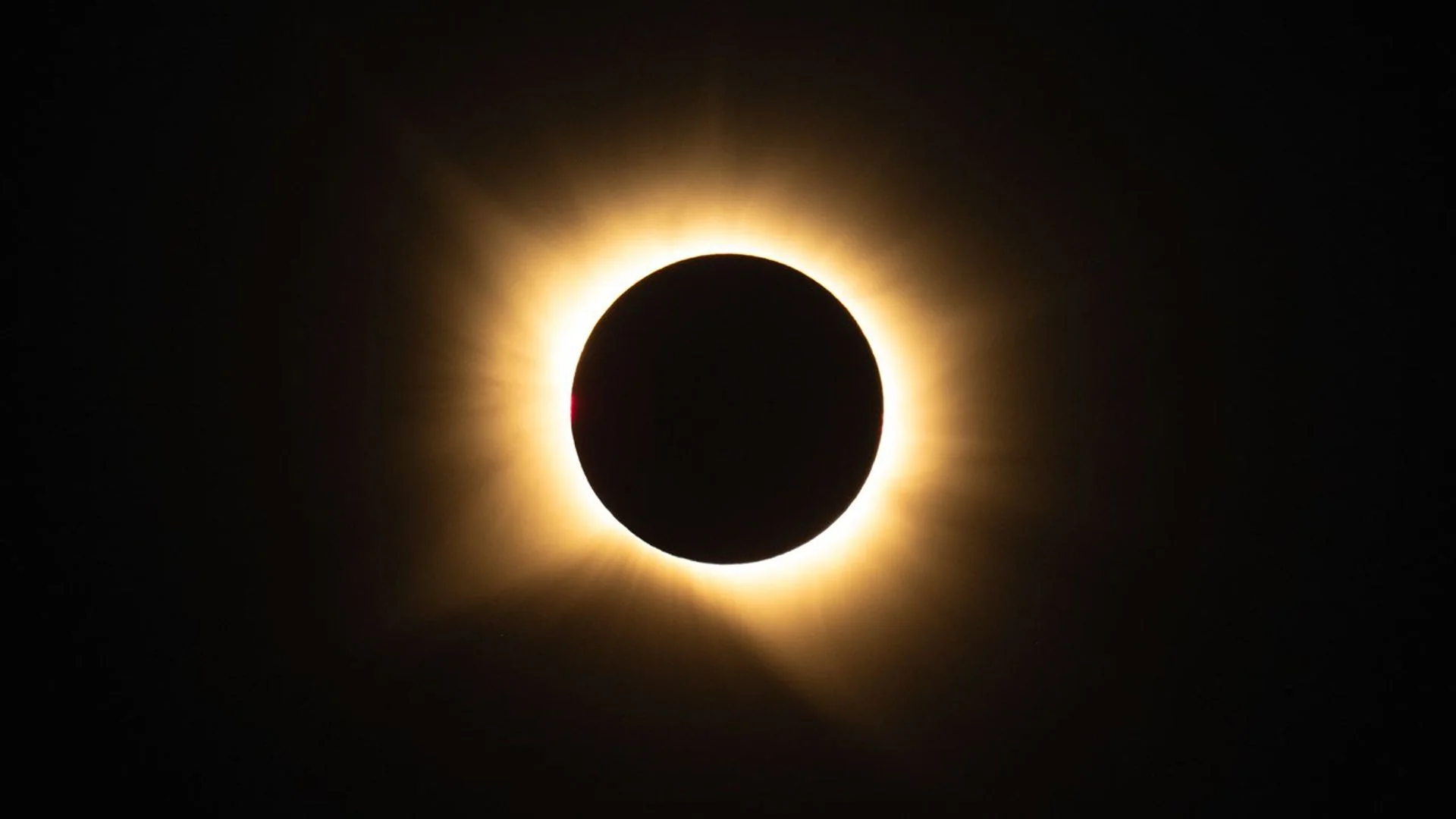
1. Introduction: The Eclipse of the Century (August 2, 2027)
On Monday, August 2, 2027, the world will witness what astronomers universally hail as the 'Eclipse of the Century.' While most total solar eclipses afford between two and three minutes of fleeting totality, the 2027 eclipse morocco will plunge observers into complete midday darkness for an astonishing duration of up to 4 minutes and 51 seconds in Morocco (and up to 6 minutes and 23 seconds globally in Egypt).
This extraordinary duration occurs because the Moon will be near its orbital perigee (only 357,000 km from Earth), creating an unusually large apparent lunar disc, while Earth will be positioned near its aphelion, making the Sun appear slightly smaller than usual. The result is an expansive umbral shadow cone measuring over 250 kilometers wide that sweeps across Northern Morocco, the Strait of Gibraltar, and North Africa.
For astronomy enthusiasts, serious astrophotographers, and adventurous travelers alike, the morocco solar eclipse 2027 represents an unprecedented celestial opportunity. The Earth will not experience a longer total solar eclipse on land until the year 2114.
2. Why Morocco is the World’s Premier Viewing Destination
While the path of the eclipse 2027 morocco also touches southern Spain, Algeria, Tunisia, Libya, Egypt, and Saudi Arabia, Morocco stands out as the single most compelling and accessible destination on the globe. Here is why:
- ✓Unbeatable Weather Odds: While coastal Europe often contends with marine cloud layers and summer storms, Northern Morocco offers exceptional statistical clear sky probabilities in early August (cloud cover probability under 4%).
- ✓World-Class Tourism Infrastructure: Morocco combines ancient culture with modern efficiency. High-speed Al Boraq bullet trains connect northern gateway cities, modern toll highways traverse the country, and international airports offer direct nonstop flights to European and North American hubs.
- ✓Incredible Scenic Diversity: You can watch totality framed against the cobalt-blue lime-washed alleys of Chefchaouen in the Rif Mountains, along the dramatic Mediterranean cliffs of Tangier, or near Tetouan, with optional post-eclipse extensions to the golden dunes of Erg Chebbi.
- ✓Safety & Hospitality: Morocco is widely recognized as one of the most stable, welcoming nations in the region, with deep traditions of hospitality and licensed, regulated tourism operators.
3. Full Path of Totality Breakdown in Morocco
The lunar shadow crosses the Strait of Gibraltar at approximately 08:27 AM local time, with totality occurring between 09:37 and 09:49 AM. The central line enters northern Morocco, traversing through the Rif mountain range and curving southeastward toward the Sahara desert.
| City | Partial Start | Totality Start | Totality Duration | Sun Height |
|---|---|---|---|---|
| Tangier | 08:40:39 | 09:44:47 | 4 min 51 sec | 64° |
| Tetouan | 08:41:10 | 09:45:20 | ~4 min 50 sec | 64° |
| Oujda | 08:43:01 | 09:51:15 | 1 min 7 sec | 65° |
Notice that the Sun is situated between 62° and 67° above the horizon during totality across all Moroccan cities. This high solar altitude ensures that you will not have to contend with buildings, trees, or mountains blocking your view of the Sun.
4. August Weather Odds & Summer Climate in Morocco
In eclipse chasing, cloud cover probability is the single most critical variable. Even a minor cumulus puff can obstruct the corona. Fortunately, summer meteorological patterns in Morocco are dominated by the stable Azores High pressure system, which suppresses cloud formation across North Africa.
Zero cloud risk historically recorded on August 2 over the past 30 years.
High mountain valleys clear rapidly after dawn, creating crystalline visibility.
Warm continental atmosphere with virtually zero convective cloudiness at 09:40 AM.
Because totality occurs between 09:37 and 09:49 AM, travelers will experience the eclipse during the mild morning hours (temperatures typically between 24°C and 30°C / 75°F–86°F), well before the intense afternoon desert heat settles in.
5. Top 5 Morocco Observation Sites Compared
Depending on whether your priority is maximum totality duration, photographic composition, or comfort, here is how Morocco's primary viewing hubs compare:
1. Tangier & Cape Spartel (Morocco Centerline Maximum)
4 min 51 secThe Astronomical Champion: Tangier delivers the single longest duration of totality on land anywhere in Morocco at 4 minutes and 51 seconds. The dramatic cliffs of Cape Spartel and the Strait of Gibraltar provide panoramic maritime horizon views under mild 25°C morning temperatures.
2. Tetouan & Mediterranean Coastal Plain
~4 min 50 secThe Coastal Centerline Corridor: The Mediterranean shoreline near Tetouan sits right on the path with nearly 4 minutes and 50 seconds of totality, offering wide-open sea horizons and gentle coastal breezes.
3. Chefchaouen & Rif Mountains Corridor
Tour Staging Base (~4m)The Flagship Cultural Hub: Approximately 4 minutes of totality framed by indigo-washed medina walls and rugged limestone Rif summits. Our official 7-day tour positions travelers in Chefchaouen and Tetouan on Days 3 and 4 to eliminate morning highway stress.
4. Oujda & Eastern Morocco
1 min 07 secThe Eastern Borderlands: Positioned within the southern path of totality in eastern Morocco, Oujda experiences 1 minute and 7 seconds of totality (09:51:15 to 09:52:22 GMT+1).
5. Marrakech & Sahara Desert (Outside Totality)
Partial Only (92.5% & 89%)Critical Travel Advisory: Both Marrakech (92.5% partial) and the Sahara dunes of Merzouga (89% partial) lie south of the totality path. They do not experience totality or darkness. We feature them as pre- or post-eclipse cultural and desert safari extensions.
6. Duration of the 2027 Eclipse in Chefchaouen & Northern Morocco
One of the most frequently asked questions by travelers is: What is the duration of the 2027 eclipse in Chefchaouen and Northern Morocco?
In Northern Morocco, maximum land totality is 4 minutes and 51 seconds in Tangier. In Chefchaouen and the Rif mountain corridor, totality spans approximately 4 minutes between 09:43 and 09:47 local time (GMT+1) on August 2, 2027, with the Sun situated 64° high in the morning sky.
7. Astrophotography & Certified Solar Filters
Photographing a total solar eclipse 2027 morocco requires careful preparation. During all partial phases, you must attach an ISO 12312-2 certified solar filter to the front of your camera lens or telescope. Looking through an unfiltered telephoto lens will instantly destroy your camera sensor and permanently damage your vision.
For wide-angle landscape shots capturing the blue rooftops of Chefchaouen or desert dunes under totality, use 14mm–24mm. For close-up corona streamers and ruby solar prominences, use 400mm–800mm with a sturdy carbon fiber tripod.
The moment totality begins (Baily’s beads disappear), immediately remove your solar filter! Bracket your exposures from 1/1000s (for prominences) up to 1 second (for outer coronal streamers and earthshine).
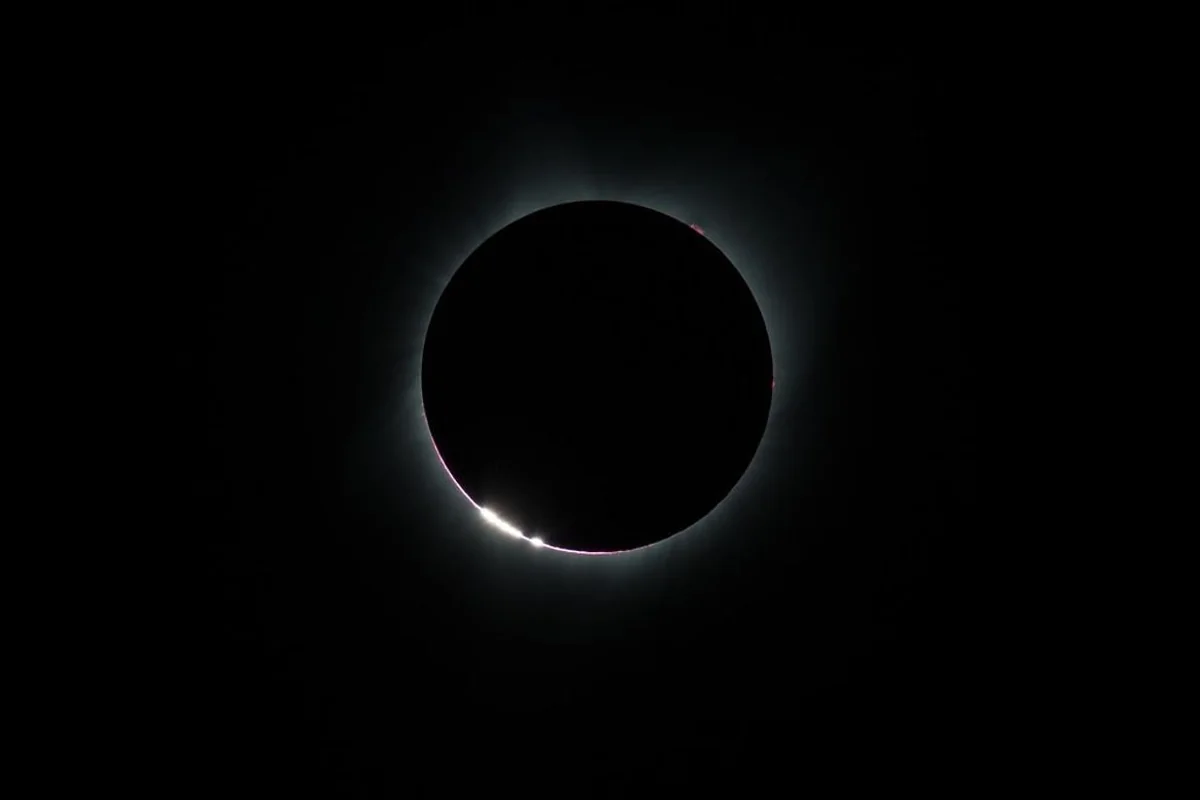
Baily's Beads & The Diamond Ring
Beaming sunlight through lunar mountain gaps captured during totality transition.
Photo: NASA / Aubrey Gemignani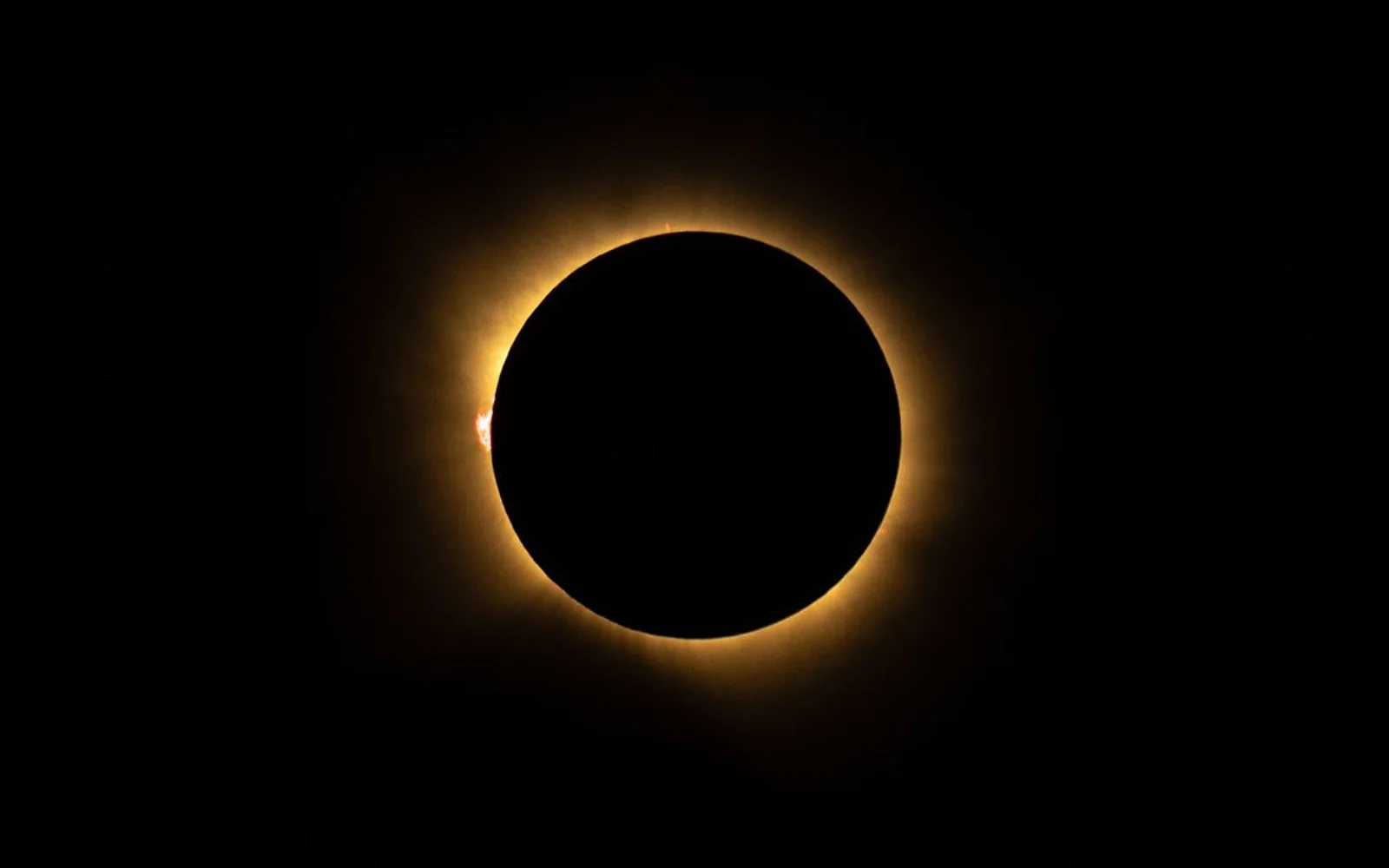
Chromosphere & Ruby Prominences
Massive magnetic loops of ionized hydrogen rising off the solar limb visible during totality.
Photo: NASA / Aubrey Gemignani8. Guided Tour vs. Independent Travel in 2027
While independent travel is feasible in Morocco, a major celestial event like the 2027 eclipse morocco creates severe localized bottlenecks. In destinations like Chefchaouen and Tetouan, hotel capacity is limited, while tens of thousands of international visitors will attempt to arrive simultaneously.
Booking a guided morocco eclipse 2027 tour with Morocco Travel Experts provides crucial advantages:
- • Arrive near the viewing zone the day before, completely avoiding morning highway gridlock.
- • Guaranteed rooms in boutique riads and 4-star or 5-star luxury hotels secured by our local agency.
- • Dedicated professional English-speaking drivers and certified local historian guides.
- • Certified ISO 12312-2 eclipse safety glasses provided to all travelers.
9. How to Book Morocco Eclipse 2027 Tour Packages Early
Because our groups are strictly kept intimate, our morocco eclipse 2027 tour packages are allocated on an advance inquiry basis. Inquiring early ensures your preferred accommodation class (4-Star standard or 5-Star luxury).
Reserve Your Morocco Eclipse 2027 Tour Package
Experience our official 7-Day Northern Morocco tour (Casablanca, Rabat, Chefchaouen, Tetouan, Fes, Volubilis) with guaranteed positioning near totality the day before, or request a tailored itinerary customized for your party.
10. Quick Reference Planning FAQ
Monday, August 2, 2027. Totality occurs between 09:37 AM and 09:49 AM local time.
Over 5 minutes in Northern Morocco (Tetouan / Chefchaouen) and up to 6 minutes 12 seconds in the Sahara Desert.
Only during the 100% totality phase is it safe to look with the naked eye. Certified ISO 12312-2 glasses are strictly mandatory for all partial phases.